A buyer touring a canal-front lot in Leeward will eventually be handed the same document: Blue Haven Marina's spec sheet, listing berths for vessels up to 220 feet with drafts as deep as 12 feet. It reads like a promise. Buy here, and whatever you own can come home.
The promise applies to the marina. It says nothing about how a boat gets to the marina in the first place.
Every vessel entering Leeward Going Through from the Atlantic has to pass through Leeward Cut, a break in the barrier reef that boating guides describe as constantly shifting, with depths ranging from 7 to 12 feet on either side of it. Local knowledge is required to run it safely, and the standing advice for anyone unfamiliar with the passage is to radio Leeward Marina ahead of time rather than attempt it blind. That's the actual gate. The marina's brochure describes what happens after you're already through it.
The Numbers Don't Even Agree With Each Other
Even the professionals who manage and market Blue Haven can't settle on one draft figure. IGY Marinas, which operates the property, lists a maximum draft of 12 feet for vessels up to 220 feet. A marina booking platform lists the same 220-foot length limit but puts the controlling draft at 8 feet at low tide. A villa rental guide splits the difference at 12 feet and 200 feet.
None of these numbers is wrong. They're describing different things: dockside water at different points in the tide cycle, different sections of the marina, different assumptions about how much margin a captain wants before touching bottom. The pattern that matters for a buyer is that three sources describing the same facility can't agree on one draft number, which means a spec sheet is a starting point for a phone call to the dockmaster, not a fact to build a purchase decision on.
That uncertainty compounds once you're talking about a private dock on the interior canal system rather than a berth at the marina itself, because nobody publishes a spec sheet for that water at all.
Three Waterfront Products, One Shared Bottleneck
Leeward doesn't sell one kind of waterfront. It sells three, and they behave differently enough that comparing prices across them without accounting for the difference is the fastest way to misread the market.
| Waterfront Type | What You Get | What You Don't Get |
|---|---|---|
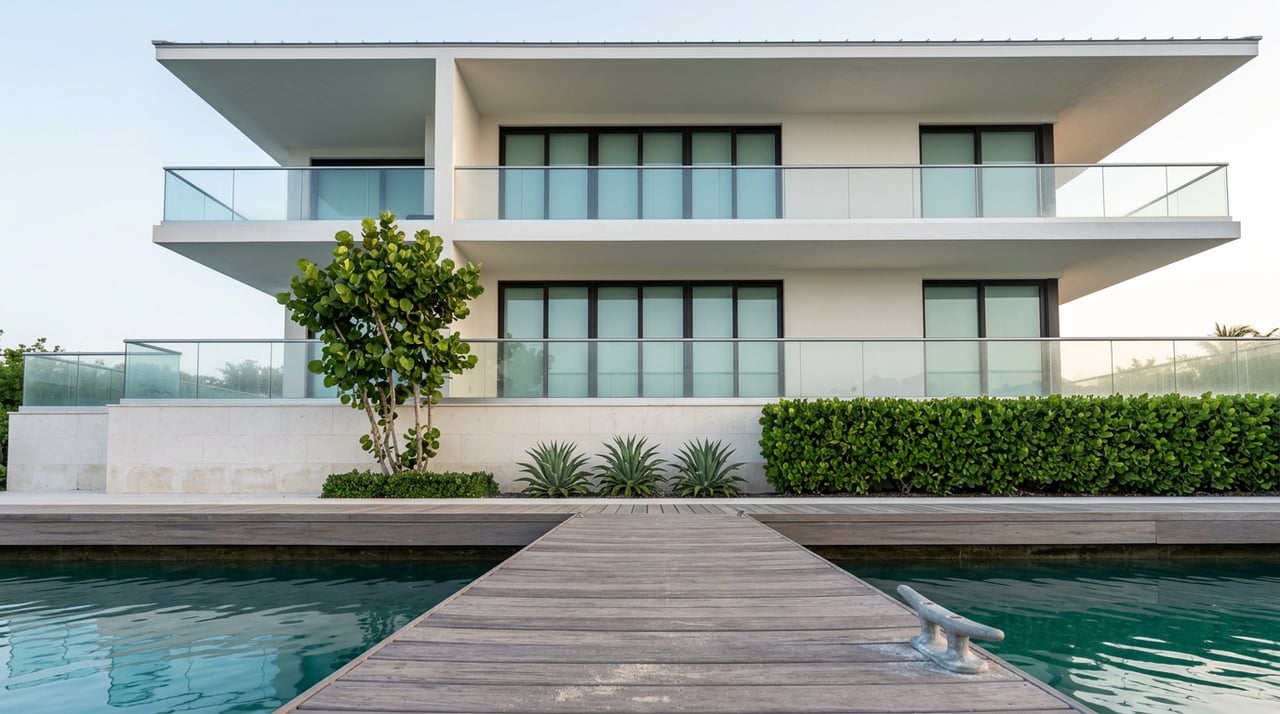
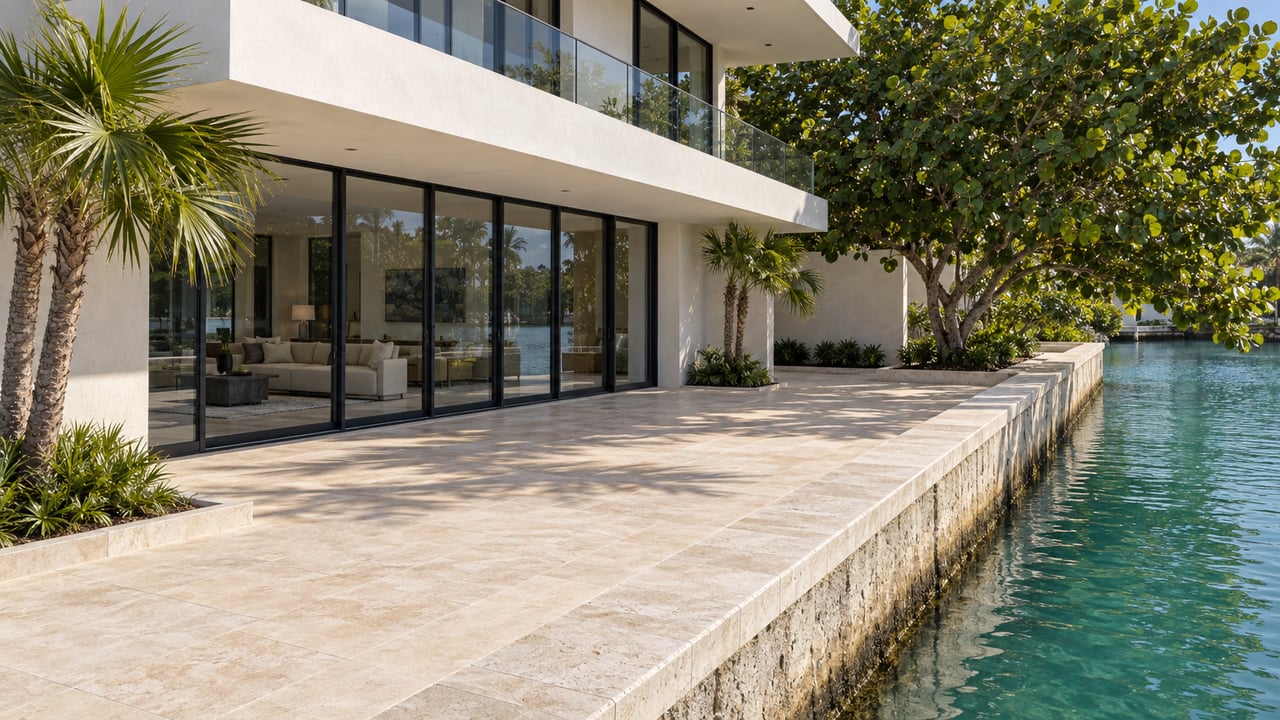
| Interior canal lot | A private dock, sometimes exceeding 100 feet, on quiet, largely no-wake water inside the HOA-governed interior | Independent ocean access. Every canal boat still exits through the same Cut as everyone else. |
| Channel frontage (Leeward Going Through) | Direct deep water and walking distance to Blue Haven Marina, restaurants, and services | The privacy of the interior canals. The channel is described as busy through the day, with tour boats, wakeboarders, and paddlers sharing the water. |
| Beachfront (Leeward Beach) | Open sand and proximity to public beach accesses like Stubb's Point and Pelican Point | Any private slip. A boat owner here is using the marina or borrowing a neighbor's dock, not stepping off a private deck. |
The interior canal lots are the quietest and, on paper, the most exclusive: private dock, controlled entry, a homeowners association that keeps development orderly in a country where most neighborhoods have none. But an owner on that canal still has to clear the same Cut as a yacht docked at Blue Haven's main pier. The privacy is real. The independence from the Cut is not.
Channel frontage buys proximity and depth at the cost of the privacy the canal lots are selling. Beachfront buys the sand and the walk but no dock at all, private or otherwise.
None of the three is a wrong choice. The mistake is assuming the interior canal product includes an escape from the constraint that channel frontage is openly built around. It doesn't. It just moves the constraint further from the front door.
Why This Isn't Getting Fixed Soon
The obvious response to a shifting, shallow reef cut is to dredge it. That's already been proposed for Leeward Going Through Channel, and it's stalled.
The tourism board's own account of the area describes the dredging plan as an ongoing dispute: natural backfill and sand movement have restricted large-vessel access over time, an application has gone in to re-dredge, and the project faces local apprehension because the displaced sediment would likely damage nearby wetlands and the barrier reef itself. There's no published timeline for resolution, and the environmental objection is the kind that tends to outlast a single approval cycle in a small island jurisdiction.
For a buyer, the practical read is straightforward: the Cut you'd be dealing with at closing is very likely the Cut you'll still be dealing with in five years. Anyone pricing a Leeward waterfront purchase against an assumption that deeper, easier access is coming should treat that as speculative, not as a feature already priced into the deal.
What the HOA Actually Controls
Leeward's interior is one of the few developments in the country subject to a homeowners association, which is part of why it reads as more orderly than the built-as-you-go pattern found elsewhere on Providenciales. Guard booths sit at both entrances, though public traffic still flows freely to the beaches and businesses inside. The community also sits near the Royal Turks and Caicos Golf Club, an 18-hole course designed by Karl Litten that has operated since 1992 under its earlier name, Provo Golf Club, giving the interior a country-club texture that most Provo neighborhoods don't have.
That governance is genuinely useful. It's also limited to what happens on land and inside the gates. An HOA can enforce architectural standards, maintain roads, and keep the canal banks tidy. It has no authority over a reef cut two miles offshore, and no mechanism to change how fast sand backfills a channel. The order buyers are paying for in Leeward is real, but it stops at the waterline.
What This Means Against Other North Shore Options
Buyers cross-shopping Leeward against Turtle Cove are often comparing two neighborhoods that both route their marina traffic through a reef cut rather than open water, since Turtle Cove's own approach for larger vessels typically runs through Sellar's Cut in the barrier reef. The instinct to treat "protected marina" as a settled fact, full stop, misses that both neighborhoods still ask the same underlying question: how deep, and how reliable, is the passage between the marina and the ocean on the day you actually want to leave.
That question is worth asking of any north-shore marina claim on Providenciales, not just Leeward's. It just happens to be unusually well documented here, because the dredging dispute has kept the Cut's limitations part of the public conversation rather than something buried in a brochure.
FAQ
Does Blue Haven Marina's published draft apply to my private canal dock too? No. The marina's spec sheet describes water at its own docks. A private canal lot's dock depth is a separate, unpublished figure, and every vessel using either one still has to clear Leeward Cut to reach open water.
Is Leeward Cut going to be dredged soon? There's no confirmed timeline. An application to re-dredge has faced local pushback over the environmental damage it could cause to nearby wetlands and the barrier reef, and that kind of objection tends to slow projects in a small jurisdiction rather than resolve quickly.
Do all Leeward properties come with boat access? No. Only interior canal lots and Leeward Going Through Channel frontage come with the possibility of a private dock. Beachfront addresses along Leeward Beach rely on the marina or a neighbor's dock for anything larger than what launches from the sand.
If you're weighing a canal lot against channel frontage in Leeward, or trying to figure out what a specific dock can actually handle before you make an offer, Sean O'Neill can walk the property with you and get the real answer from the people who run the water, not the brochure.