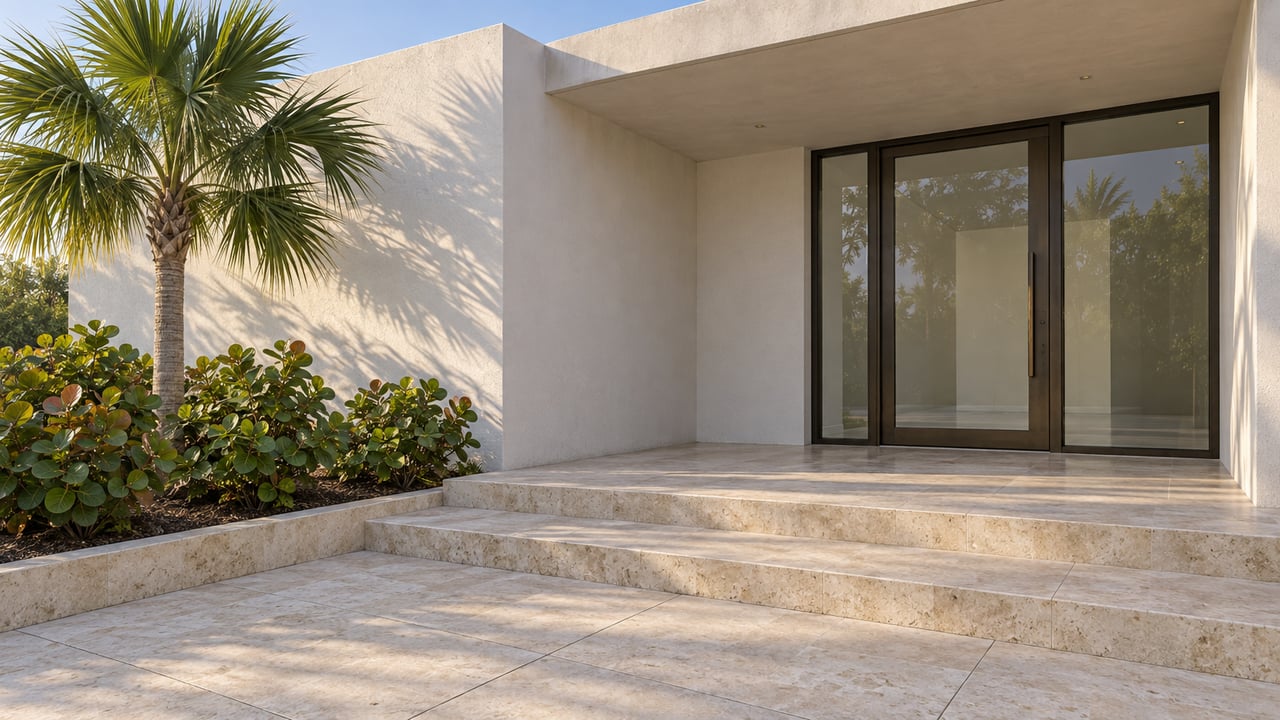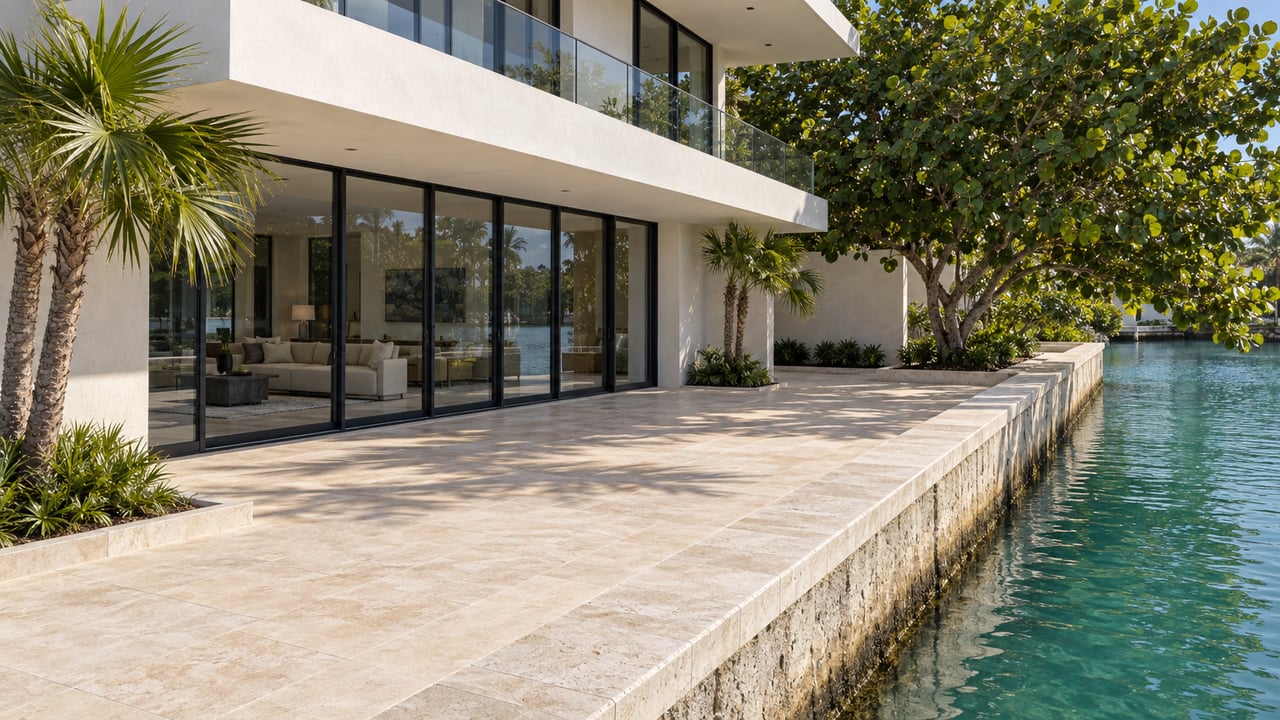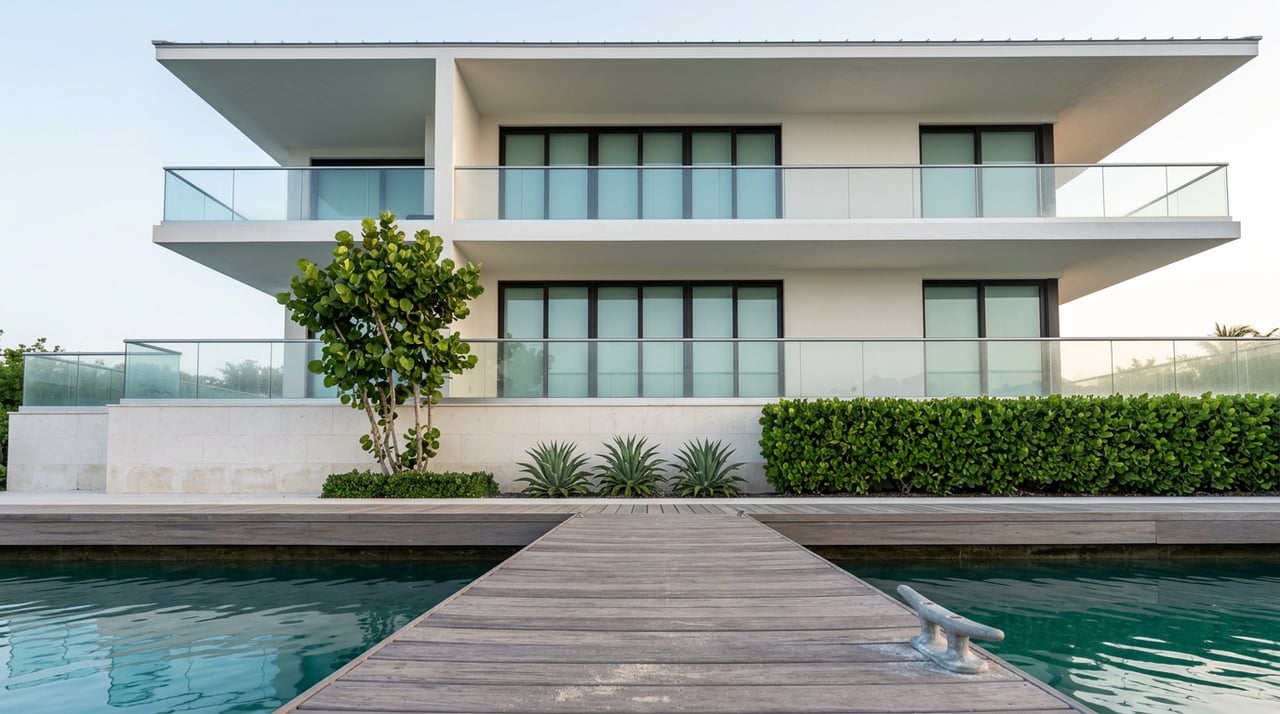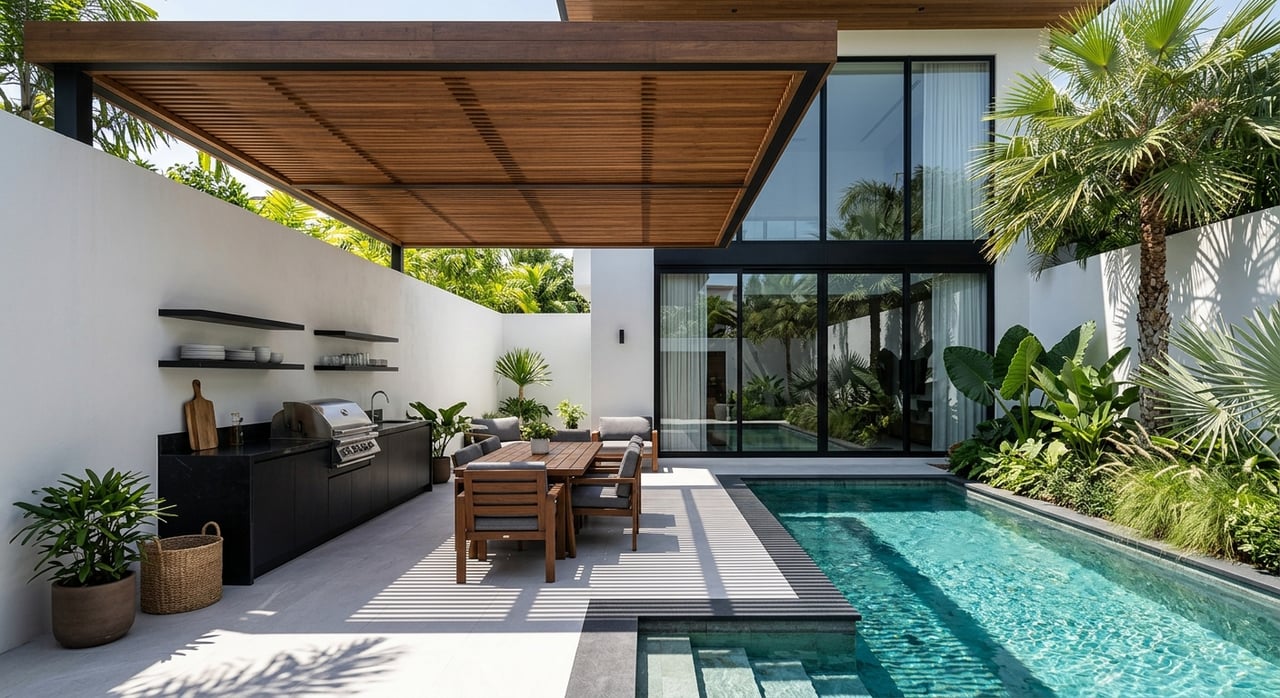
If you are drawn to Leeward, you are probably balancing two very different paths to the same goal: secure a villa you can enjoy sooner, or create one that fits your vision from the ground up. In this part of Providenciales, that choice carries more weight because Leeward blends waterfront living, marina access, canal-front parcels, private homes, and rental-friendly appeal in one area. This guide will help you compare speed, control, costs, and risk so you can shape a smarter villa strategy. Let’s dive in.
Why Leeward changes the equation
Leeward sits on the northeast point of Providenciales and includes private homes, luxury rental villas, Blue Haven Marina, an HOA-managed interior, businesses, an elementary school, and a canal system. That mix makes it one of the clearest places on the island where personal-use ownership and rental positioning can overlap.
For you as a buyer, that means either buying or building can work in principle. It also means your decision should be tied to the exact parcel or villa, especially if you are looking at canal-front, oceanfront, or marina-adjacent property.
Waterfront location adds opportunity, but it also adds diligence. Current local guidance notes ongoing concern around dredging in the Leeward Going Through Channel because of backfill, wetland, and reef impacts, so you should confirm present-day assumptions around beach access, channel maintenance, dock use, and navigation before you commit.
Buying a villa in Leeward
Buying an existing villa is usually the faster route. You can move more quickly toward occupancy, and if rental use is part of your plan, you may be able to start that process sooner than you could with a custom build.
That speed matters in Leeward because the neighborhood already supports a mix of lifestyle ownership and luxury rental activity. If your priority is time, convenience, or a cleaner path to near-term use, an existing home often has the advantage.
When buying makes the most sense
Buying tends to fit best when you want:
- Faster occupancy
- Earlier rental readiness
- A more defined budget at the time of purchase
- Less exposure to permit and construction timing
- A simpler path for a second-home purchase
For many overseas buyers, the legal structure is fairly straightforward. Current local guidance states that there are no restrictions on an individual foreign buyer purchasing real estate, and government permission is not required beforehand, although foreign corporations cannot own land directly and must use a local corporation or trust.
What to review before you buy
Even a polished resale should be assessed as an island asset, not a mainland one. Local building guidance highlights salt air, storm surge flooding, and rapid metal corrosion as practical realities in Providenciales.
That means your due diligence should go beyond finishes and furniture. In Leeward, especially near the water, a smart review should include:
- Title and registered charges through the Land Registry
- Survey boundaries
- Drainage and flood exposure
- Storm resilience and maintenance history
- Corrosion on metal components
- HOA rules and obligations
- Utility setup and capacity
- Access assumptions for docks, canals, or waterfront edges
Title work is central, not optional. The Turks and Caicos Land Registry records and guarantees title and holds parcel data including ownership, charges, and rights, making it a core part of the purchase process.
Buying costs to expect
On Providenciales, the main acquisition cost is stamp duty. Current government policy sets it at 6.5% up to $250,000, 8% from $250,001 to $500,000, and 10% above $500,000.
The tax structure is also important for your long-range planning. Government policy states that Turks and Caicos has no personal income tax, corporate income tax, or annual property tax, so the ownership cost profile is more front-loaded at purchase than many mainland buyers expect.
If you plan to rent the villa
Rental intent can materially change the math. The Revenue Department states that the Hotel & Tourism Accommodation Tax applies at 12% to accommodation, vacation rentals, meals and drinks, and related tourism services.
If you are comparing two existing villas, one set up for private use and one positioned for short-term rentals, their operating profiles may be very different. In Leeward, where personal use and rental demand can overlap, that distinction matters early in your decision-making.
Building a custom villa in Leeward
Building gives you the highest level of design control. If you want a specific layout, tailored outdoor living, storm-aware materials, or a long-term legacy property, a custom build may be the more compelling route.
That said, building in Leeward is not just a design decision. It is a process decision, and the timeline is less predictable than buying an existing villa.
The typical build path
Local building guidance describes the usual sequence as:
- Acquire the land
- Complete architect-led design
- Apply for planning permission
- Obtain a Building Permit before construction begins
- Complete construction
- Obtain an Occupancy Certificate before legal habitation and utility connection
Planning permission is estimated at about three months, which is one of the clearest timeline markers available. Still, the wider schedule can vary depending on application timing, approvals, and project complexity.
The Physical Planning Board has also reminded applicants that development cannot begin until the relevant building permit certificates have been issued. It has further noted that applications submitted too close to a meeting date may miss the agenda, which can create additional timing uncertainty.
Why site selection matters more in Leeward
Inland lots and waterfront lots are not equal from a build-risk standpoint. In Leeward, canal-front, oceanfront, and marina-adjacent parcels require especially careful review because setbacks, environmental conditions, and shoreline characteristics can directly affect the buildable envelope.
Official environmental planning materials state that developments must comply with setback requirements and the TCI Building Code, and that an Occupancy Certificate is required before operation. They also note that coastal setbacks receive special attention because shoreline conditions can affect the building line.
For you, this means a lot that looks ideal on first pass may not support the exact home form, dock assumption, or outdoor plan you had in mind. The design conversation should start only after the site constraints are clearly understood.
Construction realities to factor in
A custom build in Turks and Caicos is more exposed to island logistics than a resale purchase. Local guidance states that construction materials are often 60% to 100% more expensive than in the U.S. or Canada because of import duty, freight, and high utilities.
The same guidance notes that cisterns may be required in some situations and that storm-rated windows and corrosion-resistant fixtures are sensible in the marine environment. Project managers are also commonly used to help streamline the process.
Those factors do not make building the wrong choice. They simply mean your budget should reflect shipping realities, durability standards, and the coordination needed for a high-quality island build.
Financing a build
If financing is part of your plan, local guidance says construction mortgages are available through local banks, but lenders typically require large down payments and construction lending is often equity-based. Mortgage registration also adds a charge cost of 1% of the mortgaged amount.
That detail is useful when you compare a cash purchase, a financed resale purchase, and a land-plus-construction structure. The headline land price is only part of the financial picture.
Are there any build-side incentives?
There can be, but you should not assume they apply automatically. Government investment policy states that some development projects have historically benefited from duty exemptions on construction materials, fittings, fixtures, and furniture under development agreements.
The Property Ownership Incentive Program also offers certain eligible local Status Holder or BOTC first-time homeowners up to $50,000 of combined stamp and or import duty relief, subject to conditions, an 18-month completion window, and a 7.5% customs processing fee on imports. For many foreign buyers, these are discussion points to review carefully with counsel rather than standard assumptions.
Buy versus build in Leeward
At a practical level, this choice usually comes down to speed versus control. Buying favors quicker occupancy, earlier rental income potential, and lower execution risk. Building favors exact design control, long-term personalization, and the ability to create a highly tailored waterfront product.
Here is a simple side-by-side view:
| Factor | Buy Existing Villa | Build Custom Villa |
|---|---|---|
| Time to use | Usually faster | Usually longer |
| Design control | Limited to existing layout and condition | High |
| Budget certainty | More defined at purchase | More exposed to changes |
| Permit risk | Lower | Higher |
| Construction risk | Lower | Higher |
| Rental timing | Potentially earlier | Delayed until completion and occupancy approval |
| Waterfront tailoring | Limited by what exists | Can be customized within site and code limits |
A smart decision framework
If you are deciding between the two, start with your real objective rather than the property type. In Leeward, the right answer often becomes clearer once you decide whether your priority is immediate enjoyment, rental timing, legacy design, or long-range value creation.
Choose buying if your priorities are clear speed and simplicity
Buying may be the stronger move if you want to:
- Use the home soon
- Avoid the moving parts of construction
- Enter the rental market faster
- Reduce timeline uncertainty
- Focus your diligence on title, condition, and operating costs
Choose building if your priorities are control and customization
Building may be the stronger move if you want to:
- Shape the architecture around your lifestyle
- Maximize a specific lot’s orientation or water edge
- Create a long-term family property
- Select materials and systems for durability from day one
- Accept a longer, more complex path to completion
Your Leeward due diligence checklist
Before you choose either route, compare the actual parcel or villa through a Leeward-specific lens. A practical checklist includes:
- Land Registry title and registered charges
- Survey and boundary confirmation
- HOA rules
- Utility capacity
- Planning history
- Insurance considerations
- Mortgage costs if financing is involved
- Rental tax registration if the property will be let
- Setbacks for waterfront or canal-front property
- Access, dock, and navigation assumptions where relevant
In Leeward, site selection is more consequential than in a purely inland subdivision. The area’s canal system, marina proximity, waterfront mix, and HOA structure can support both personal use and rental use, but only if the details of the specific property align with your goals.
The bottom line on Leeward strategy
Leeward is one of the few places in Providenciales where buying and building are both genuinely compelling. That is the opportunity. The challenge is that waterfront exposure, permitting, operating costs, and rental intent all matter more here than they might in a simpler neighborhood.
If you value speed, cleaner execution, and faster use, buying an existing villa is often the more efficient path. If you value precision, design control, and long-term customization, building may justify the extra process.
The best outcomes usually come from matching the property to the plan, not forcing the plan onto the wrong property. If you want a clear-eyed view of Leeward lots, villas, and the trade-offs between them, Sean O'Neill can help you evaluate the options with local insight and a concierge-level approach.
FAQs
Is Leeward in Providenciales better for buying or building a villa?
- Leeward can support either path, but buying is usually faster and simpler, while building offers more design control and more process risk.
What taxes should you expect when buying property in Leeward, Providenciales?
- On Providenciales, stamp duty is the main acquisition cost, with current rates of 6.5% up to $250,000, 8% from $250,001 to $500,000, and 10% above $500,000.
What should you verify on a canal-front lot in Leeward?
- You should confirm title, survey boundaries, setbacks, HOA rules, utility access, and any assumptions about docks, channel maintenance, navigation, and environmental exposure.
How long does it take to build a villa in Turks and Caicos?
- Local guidance estimates planning permission at about three months, but the full timeline can vary based on permits, application timing, and construction complexity.
Can foreign buyers purchase property in Turks and Caicos?
- Yes, current local guidance states that individual foreign buyers can purchase real estate without prior government permission, though foreign corporations cannot own land directly and must use a local corporation or trust.
Does rental use change the economics of a Leeward villa?
- Yes, because the Hotel & Tourism Accommodation Tax applies at 12% to accommodation, vacation rentals, meals and drinks, and related tourism services, which changes the operating model for a rental property.